
Food security and food safety begin with strong local dairy sectors. At Bles Dairies, we help farmers and processors produce more milk at lower cost while improving quality and reducing environmental impact.
Food security: local demand for affordable and nutritious dairy often exceeds supply.
Food safety: milk quality and hygiene standards are inconsistent from farm to factory.
In developing markets, low milk yields per cow lead to high greenhouse gas emissions per litre of milk. In developed markets, the challenge is to keep improving efficiency and to reduce the footprint per litre of milk. Without progress on both fronts, dairy cannot become truly sustainable.
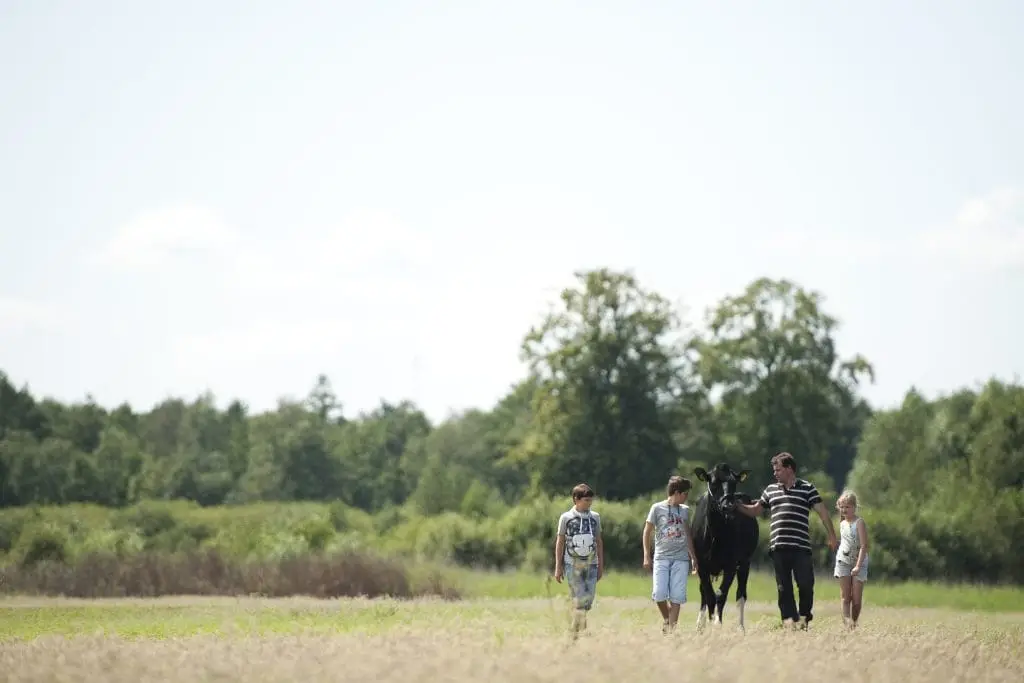
For Bles Dairies, sustainability is not a slogan but the result of profitable, efficient and responsible dairy farming.
With more than 30 years of experience in over 60 countries, we combine global expertise with local presence to strengthen the entire dairy value chain.
We work across every link in the chain, supporting farmers and processors to achieve lasting results.
Efficient animal nutrition and health: balanced rations, better cow health and reduced antibiotic use through preventive hygiene.
Regenerative soil and crop management: crop rotation, variety selection and improved grazing that maintain soil fertility and lower input costs.
Optimised feed production and sourcing: producing and sourcing quality roughage to improve feed conversion and reduce dependency on external inputs.
Herd management and genetics: healthier and more efficient cows that live longer, require fewer treatments and produce more milk with fewer emissions.
Milk quality based pricing: rewarding milk quality to improve farm income and raise production standards.
Milk collection and sourcing optimisation: improving traceability, reducing food waste and ensuring consistent quality.
Food safety and quality assurance: supporting hygiene programs, safe feed sourcing and quality control from production to processing.
We do not just advise, we demonstrate.
At Bles van Benthem Farm in the Netherlands, our approach to sustainable dairy achieves a greenhouse gas footprint that is 25 percent below the national average, only 860 grams of CO₂ equivalent per litre of milk.
In East Africa, our local teams help thousands of farmers produce more milk with fewer cows, strengthening food security and reducing dependence on imports.
Farmers produce more milk using fewer resources.
Processors receive a reliable supply of high quality milk.
Local communities gain access to safe and nutritious dairy products at an affordable price.
The environmental footprint per litre of milk continues to fall.
That is what sustainable dairy looks like in practice.
Contact our team to discuss your goals and discover how we can support you.